Why Old Houses Matter

And, more importantly, why old-house stewards like you matter.

If you own or care for an old house, you are already part of something larger than yourself. Long before historic preservation became a formal movement, ordinary people made deliberate choices to repair rather than replace, to understand rather than erase. We don’t just live in old houses, we live with them. It’s a relationship.

But, still, why do we care so passionately? Here are a few explanations. Try them on and see which ones resonate most with you.

    1. “Ain’t nothing like the real thing, baby…”– Think of old houses as original documents, like the Constitution or books of handwritten deeds kept on dusty courthouse shelves. Sure, we can scan or photograph them, even convert them to type. But these documents are more than words on a page. Similarly, the materials, proportions, and construction methods of old houses contain layers of knowledge that cannot be recovered once lost. That’s what we mean when we say old houses are “irreplaceable.”
    2. Embodied energy – Because old houses physically store all the energy (labor, materials, fuel) that went into quarrying its stone, firing its brick, felling and milling its timber, forging its nails, and raising its walls, when we preserve a building, we conserve that energy rather than discarding it. Preservation is the most reasonable, sustainable form of development that exists (the original recycling!). Don’t let the mailers lecturing you on how it’s time to replace your old, inefficient historic windows convince you otherwise. See my post Preserving Historic Windows: Is It Possible, and Why Should We Care? on the Worth Preserving blog.
    3.  Environmental wisdom Your old house is already doing more work than you might realize. Long before air conditioning and central heating, buildings responded to climate and place through orientation, massing, and ventilation. Thick walls, deep eaves, operable windows, and porches were not just aesthetic flourishes, they were problem-solving tools. And they work even when the power goes out. Quiet, truly “passive” adaptations like these are needed now more than ever.
    4. Human psychology People thrive in environments that are easy to understand and navigate), coherent (visually ordered), human-scaled, and rich in sensory detail. Old houses often meet these criteria naturally. Ornament, material texture, proportion, and craftsmanship stimulate our brains and regulate our nervous systems. The result is often described as comfort, charm, or feeling “at home.”
    5. Community economics If old houses ground us psychologically, they can also anchor our communities. Historic buildings and streetscapes tend to attract tourism, skilled trades, and reinvestment because character creates value that cannot be replicated. Preserving existing, adaptable building stock can also encourage affordable housing and creative uses that make places more vibrant. As urban writer and activist Jane Jacobs wrote, “New ideas need old buildings.” Places thrive when people can afford to live there and entrepreneurs can afford to try.

For all of these reasons (and more), historic preservation is not merely “nice,” but necessary. As an old-house steward, you’re making the kinds of decisions that, day by day, make the world a better place.

“When we build, let us think that we build forever. Let it not be for present delight nor for present use alone. Let it be such work as our descendants will thank us for…” ~ John Ruskin (from The Seven Lamps of Architecture, 1849)

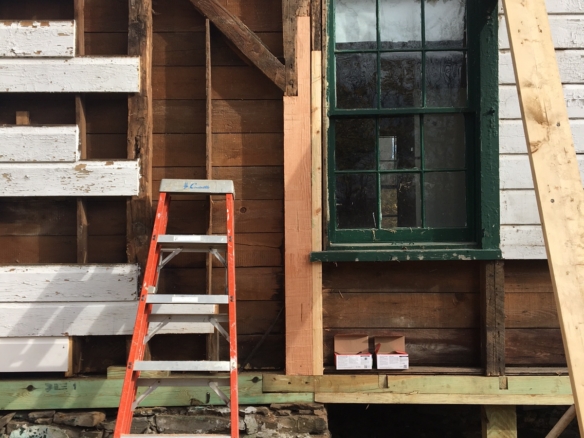
Photo by: Lisa Vollmer

AUTHOR KATE WOOD grew up criss-crossing the country in the family’s Volkswagen Bus, visiting house museums, battlefields, Main Streets, and national parks. Today, she is an award-winning preservationist, real estate broker and principal of the full-service historic rehabilitation consulting firm, Worth Preserving. Kate believes in the essential value of old-building stewardship to sustain community character. For her, each property is a cause and each client a fellow advocate. She specializes in matching people with properties, skilled contractors, historic tax credits and other benefits to support top-tier rehabilitation projects.